
Find out more about the weather in Crete to calmly plan your vacation. The climate here is wonderful!
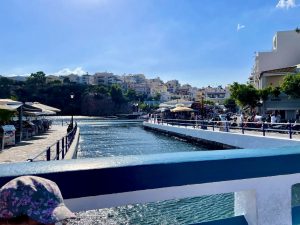
First, I’d like to note that only the gods can give an accurate weather forecast for your vacation. If you have close connections with Zeus and Poseidon, there’s no need to read this text. Otherwise, please remember that I provide general weather forecasts, describing typical climatic conditions for specific times of the year. This does not mean that the weather during your vacation will be exactly as described, as anomalies do occur—often for the better.
Second, keep in mind that Crete is a large, mountainous island, so weather conditions can vary greatly by region. It’s often the case that it rains on the northern coast while the sun shines on the southern coast. It’s always cooler in the north and hotter in the south. The west is more humid, and the east is drier. If you climb higher into the mountains, conditions change again: for example, while writing this in January, the forecast for Heraklion tomorrow is +18°C and clear, but just 37 km away in Anogia near Psiloritis, it’s +9°C and rainy. So, if you decide to vacation in the Cretan mountains, consult meteorologists or at least me. The climatic information below is mainly for those planning a seaside vacation.
Third, Cretans tend to divide the seasons according to the astronomical calendar between equinoxes and solstices. Therefore, spring in my text starts not on March 1 but on March 21, summer on June 25, and so on. For those unfamiliar with astronomy, here are the exact dates.
So… What will the weather be like during your vacation in Crete?
Spring, from March 21 to June 24
The weather in Crete largely depends on what the winter was like. If there was a lot of rain in winter, humidity and coolness linger on the island, and the sea warms more slowly due to the fresh water constantly cooling it from mountain springs and rivers. Snow remains on the mountain peaks until the end of June after a rainy winter.
Regardless of winter’s nature, there are typically more warm days than cold and rainy ones in spring. In late March and April, temperatures can rise to +25°C. The sun is very intense during this period, and a pleasant sunbath can sometimes result in a serious sunburn. Early spring may bring strong gusts of southern wind, carrying heat from the Sahara, which can feel like it’s coming from an oven. Late March and April also bring heavy rains, usually short-lived but occasionally lasting several days, cooling the temperature to +10°C. If the rain comes with a southeastern wind, the temperature doesn’t drop, but the rain falls mixed with Sahara dust.
In May and June, the weather gradually stabilizes with consistent temperatures of +20-25°C. Occasional southern winds can bring heat waves with temperatures rising to +33°C or more, but these heat spells last only a few days. Mid-spring may still see brief showers, but they become very rare by late spring.
Swimming in the sea typically begins in late March, with water temperatures reaching +16-18°C, rising to +20°C in May and +22°C or more in June.
Summer, from June 25 to September 20
Crete would be unbearably hot without the northern wind. This breeze starts to blow at the end of June, becoming steady in early July and continuing until September, always coming from the north. When it strengthens, large waves hit the northern coasts, keeping beachgoers away for a day or two. When it weakens, the entire island sizzles like a frying pan. However, such heat waves are rare and short. Typically, summer temperatures range from +28-33°C during the day and around +23°C at night, meaning it’s warm or very warm.
For those avoiding heat, don’t fear the +30°C temperatures. The warmth in Crete is different from that in Lithuania—less exhausting as long as you drink more water. In Lithuania, temperatures above +28°C are considered hot, while in Greece, heat is defined as +35°C or higher. Summer heat waves do occur but last only a few days as the northern wind quickly dissipates them.
The likelihood of rain in summer is very low, almost negligible. Although anomalies can occur: for instance, once in mid-August, I had to change a tour route upon spotting a storm on the horizon. However, even if it rains in summer, it’s brief and local. Moreover, summer rain in Crete never cools the air. It washes away the dust but doesn’t lower the temperature.
In August, water temperatures at some beaches can reach +25°C. It’s practically impossible to get cold in the water. For cooler water, look for beaches where springs flow into the sea—it’s always fresher there.
Autumn, from September 21 to December 24
This is the velvet season. The sea is warm, and air temperatures rarely exceed +30°C. Pleasant warmth persists until early November. Until then, rain is practically non-existent, with only brief and localized showers. The sky is often cloudy, preventing the air from overheating.
Cooling begins with the return of rains in late October. Initially, they are brief and local, but November can bring strong, prolonged downpours. For those vacationing in late October – early November, I always recommend hotels with heating to combat the nighttime chill.
Predicting November and December weather is very difficult. There can be wonderfully beautiful days with the sun rolling across the sky or storms with strong winds, lightning, thunder, rain, and hail. The weather in Crete can change in an instant: one moment it’s pouring, the next you can sunbathe. Typically, the first snow falls in the mountains in late November – early December.
The sea cools slowly, usually maintaining a temperature above +18°C until late December. On sunny days, it’s still possible to swim without feeling too cold up until Christmas.
Winter, from December 25 to March 20
You’ll need warm clothes, rubber boots, and heating at home. Usually, by late December, Crete is hit by storms with strong northern or northwestern winds, thunderstorms, heavy rains, and sometimes even snow. There are days when temperatures drop to +5°C or lower.
The storms subside by mid-January, bringing a brief, one- to two-week return of summer warmth known as Halcyon days, described by ancient Greeks as a sort of Indian summer, with temperatures reaching up to +25°C. Unfortunately, this doesn’t happen every year and it’s impossible to predict exactly when Halcyon days will start or how long they will last.
Throughout February and early March, a true battle of air masses occurs over Crete: cold air flows from the north, warm air from the south, resulting in unpredictable and changeable weather. There can be summer-like warmth or winter cold. It’s often very damp, and heating is needed more to drive out the moisture than to combat the cold.
In late February and early March, a southeastern wind often brings dry heat and Sahara dust, which stains plants, roads, streets, houses, cars, etc., with brownish residue. If you don’t clean your yard yourself, you might wait for a cleaner rain until autumn. The southeastern wind is followed by a northwestern wind, with cold gusts reminding you that spring won’t arrive until late March.
Water temperatures around Crete don’t drop below +15°C in winter (in the entire Mediterranean, it doesn’t fall below +13°C). For those who are hardy, such water can be more pleasant than in summer.